Free 14-day trial, then just £6.99 per month.
Please enter a valid email address
By entering your email address you are indicating that you have read and agree to the terms of use and privacy policy.
Free 14-day trial, then just £6.99 per month.
Watch the silent birth of one of the world’s loudest acoustic instruments.
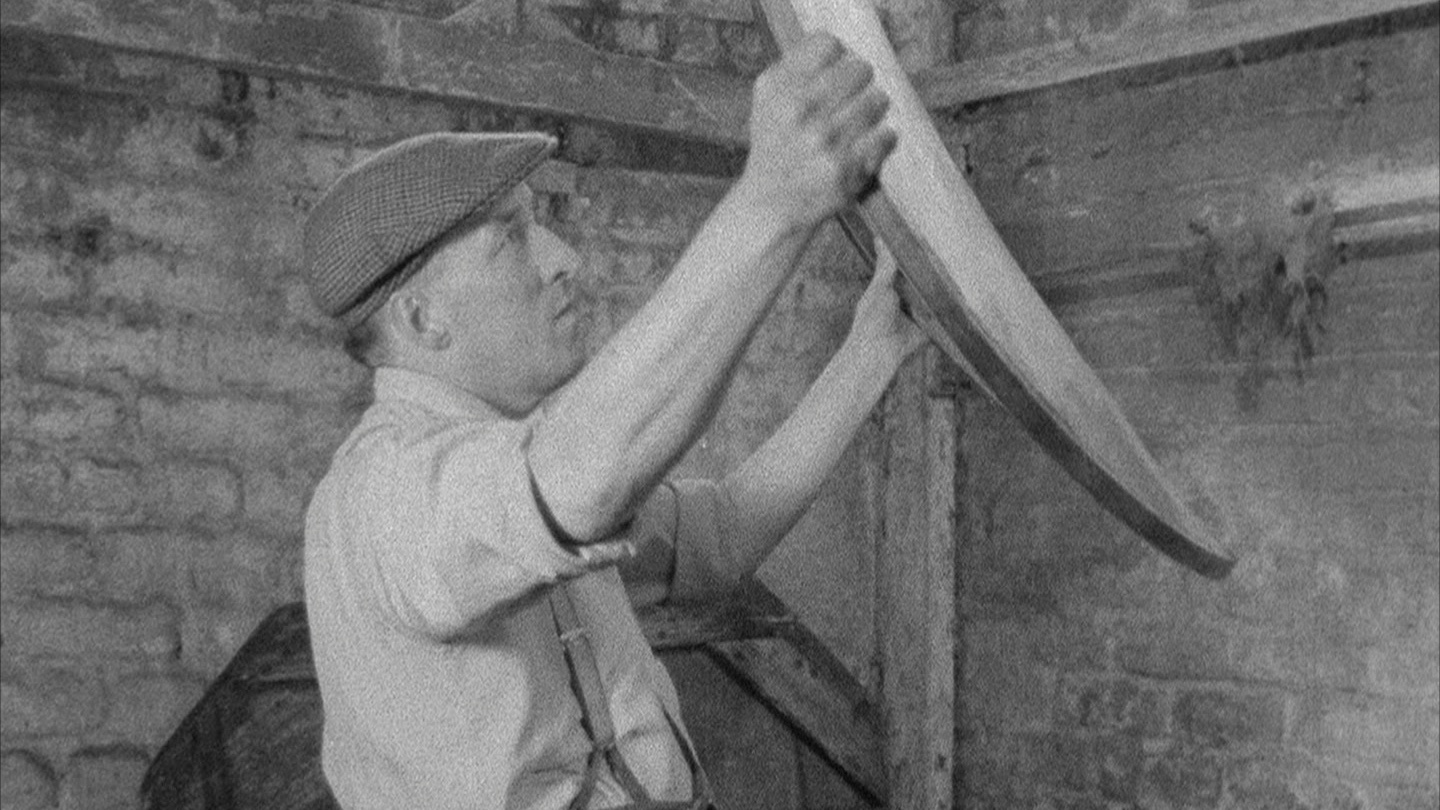
In Johnson’s famous workshop, a 10 day process happens in 9 minutes using the here’s one I made earlier trick. Hair and fat is scrapped from the goat skin until it is as smooth as plastic. The skins are soaked before the final residue is removed and they are fastened onto the flesh hoops with glue. The drum skins are inspected for flaws, then a band of wood is clamped into a wooden frame to shape the drum. Finally Mr Johnson adjusts the ropes until both sides of the drum sound the same.
The Lambeg drum has uncertain origins, although it is primarily associated with the Orange Order it was also used by the Hibernians. In some communities the same drummers would have played for both organisations. It is one of the world’s loudest acoustic instruments reaching a deafening 120dB. The large drum is worn with a neck harness and beaten with wooden cane drumsticks. It takes two she-goat skins with identical qualities to make one drum. Drummers still debate whether a painted or unpainted drum gives a purer sound and you can see examples of both in Mr Johnson’s workshop. This was filmed as part of the Ulster Television news coverage of the 12th of July in 1960. This material is courtesy of the UTV archive.