Free 14-day trial, then just £6.99 per month.
Please enter a valid email address
By entering your email address you are indicating that you have read and agree to the terms of use and privacy policy.
Free 14-day trial, then just £6.99 per month.
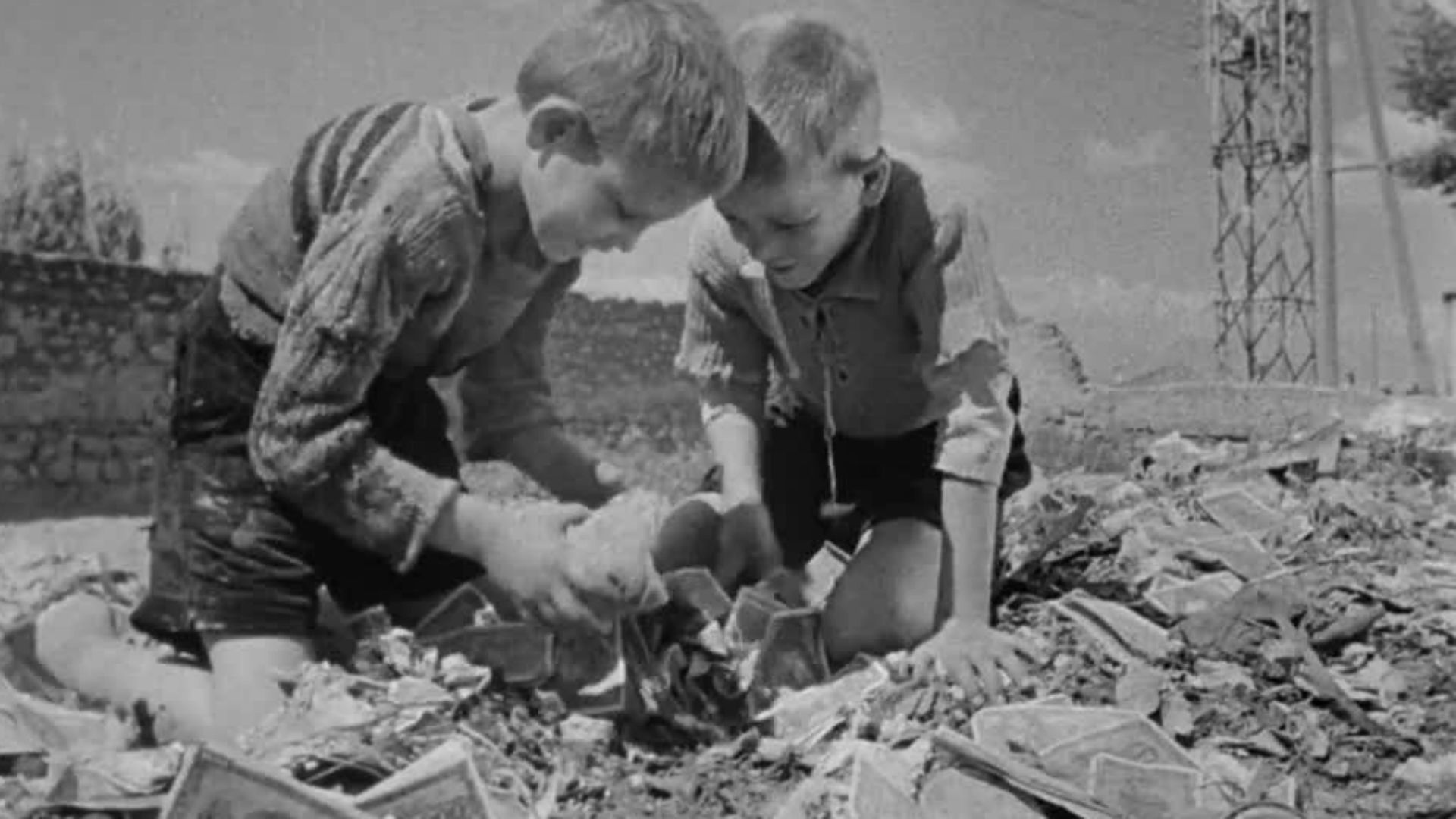
Children scrabble for bread amidst piles of worthless banknotes in this film which casts a critical eye over Britain’s role in the government of Greece after the war.
By 1945, years of war and occupation had left Greece in desperate need of help. This March of Time film’s stark images of ruined buildings, long queues for food, and the legacy of the violence of the 1944 uprising, show a country with a perilous future. The commentary emphasises the heroism of the Greeks, the generosity of the Americans and suggests that Britain’s role in running the country after the war was motivated by self-interest and a desire to minimise the influence of Communism.
This film deals with a pivotal event in modern Greek history: the murder in Athens, on December 3rd 1944, of demonstrators who were marching peacefully in support of the partisan fighters who had played a pivotal role in Greece’s fight against the Axis powers. The British, fearing the resurgence of the Greek Communist Party, had ordered the partisans to demobilise. In the march, which was organised as a protest against this decision, Greek police fired into the crowd, killing 28 people, mainly young men and women. Winston Churchill acted ruthlessly to suppress the uprising which followed the massacre, leading H.G. Wells to pen a newspaper article calling Churchill a ‘would-be British Fuhrer’.