Free 14-day trial, then just £6.99 per month.
Please enter a valid email address
By entering your email address you are indicating that you have read and agree to the terms of use and privacy policy.
Free 14-day trial, then just £6.99 per month.
A granite obelisk designed by Sir William Goscombe John of Cardiff is unveiled in memory of those who are stone dead for King and Country.
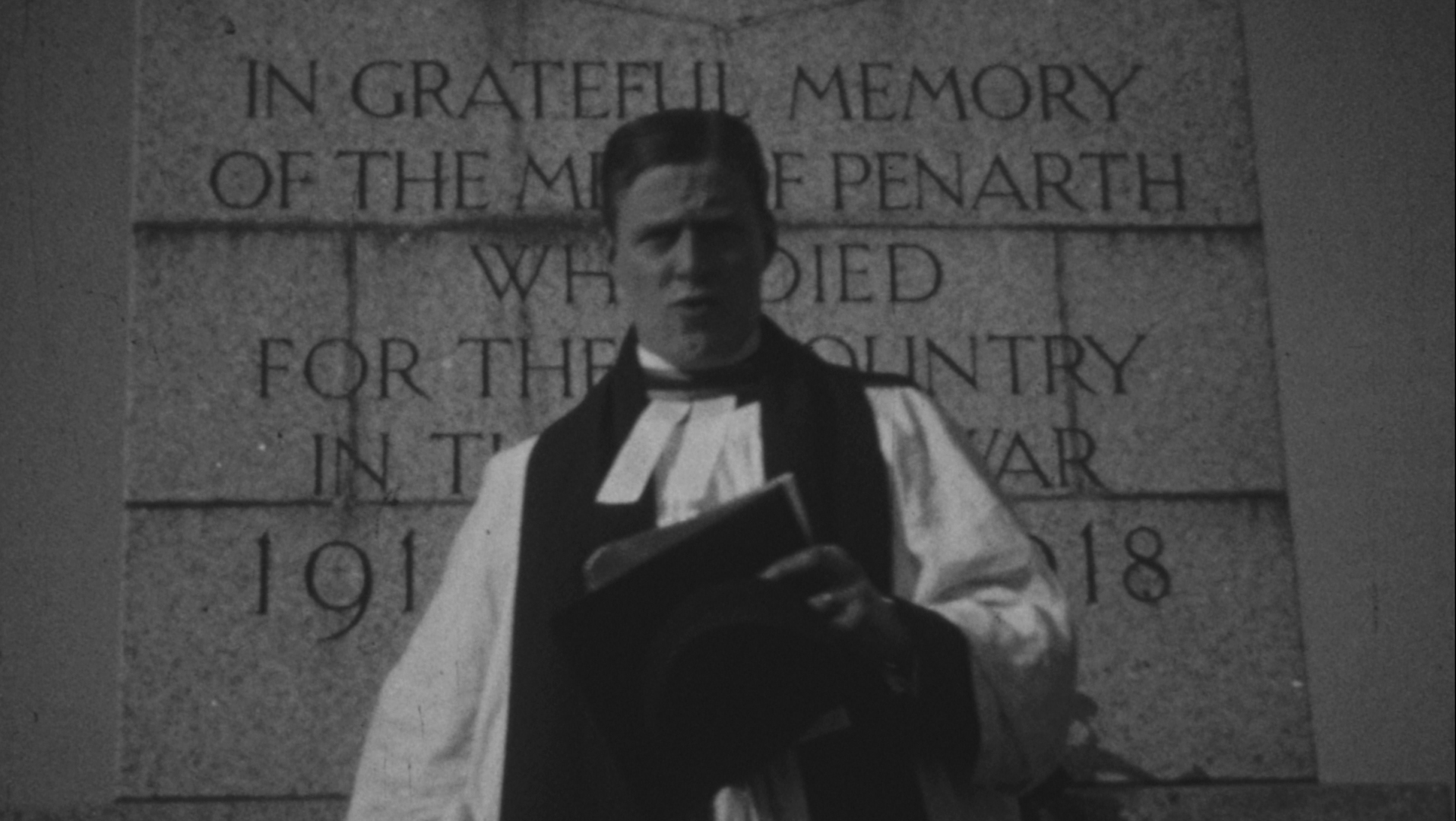
This film does not catch the unveiling of the memorial by the two women who had each lost 3 sons in the Great War, but it is a record of the community’s act of remembrance on Armistic Day (11/11) 1924, and it is obviously a moving occasion. The obelisk of white granite with a bronze winged Victory figure was designed by Cardiff-born sculptor Sir William Goscombe John (1860-1952), son of a wood carver, who also suggested the memorial’s inscription.
The report in The Penarth Times two days after the event is a classic of war-time-speak. “A glorious reunion” in heaven awaits those suffering earthly loss, and Capt Henry Arthur Evans (MP - Conservative – Cardiff South), speaking on the day, stated that the blood letting had created a “greater and nobler country”. Everyone is reminded that the “sacrifice” by “splendid manhood” for King, Country and Empire was not in vain. Taken together with the 1916 film ‘Hepworth Cinema Interviews – I, II and III’, whose tone is best illustrated by the mouthings of the Earl of Meath, it is easy to imagine how difficult it might have been to suggest in public that the Great War was murderous, bloody and ridiculous.