Free 14-day trial, then just £6.99 per month or £65 per year.
Please enter a valid email address
By entering your email address you are indicating that you have read and agree to the terms of use and privacy policy.
Free 14-day trial, then just £6.99 per month or £65 per year.
The life of Yorkshire sheep past: unceremoniously thrown into a pond, tugged by its horns with a pole hither and thither, before swimming to the safety of having its fleece cut off.
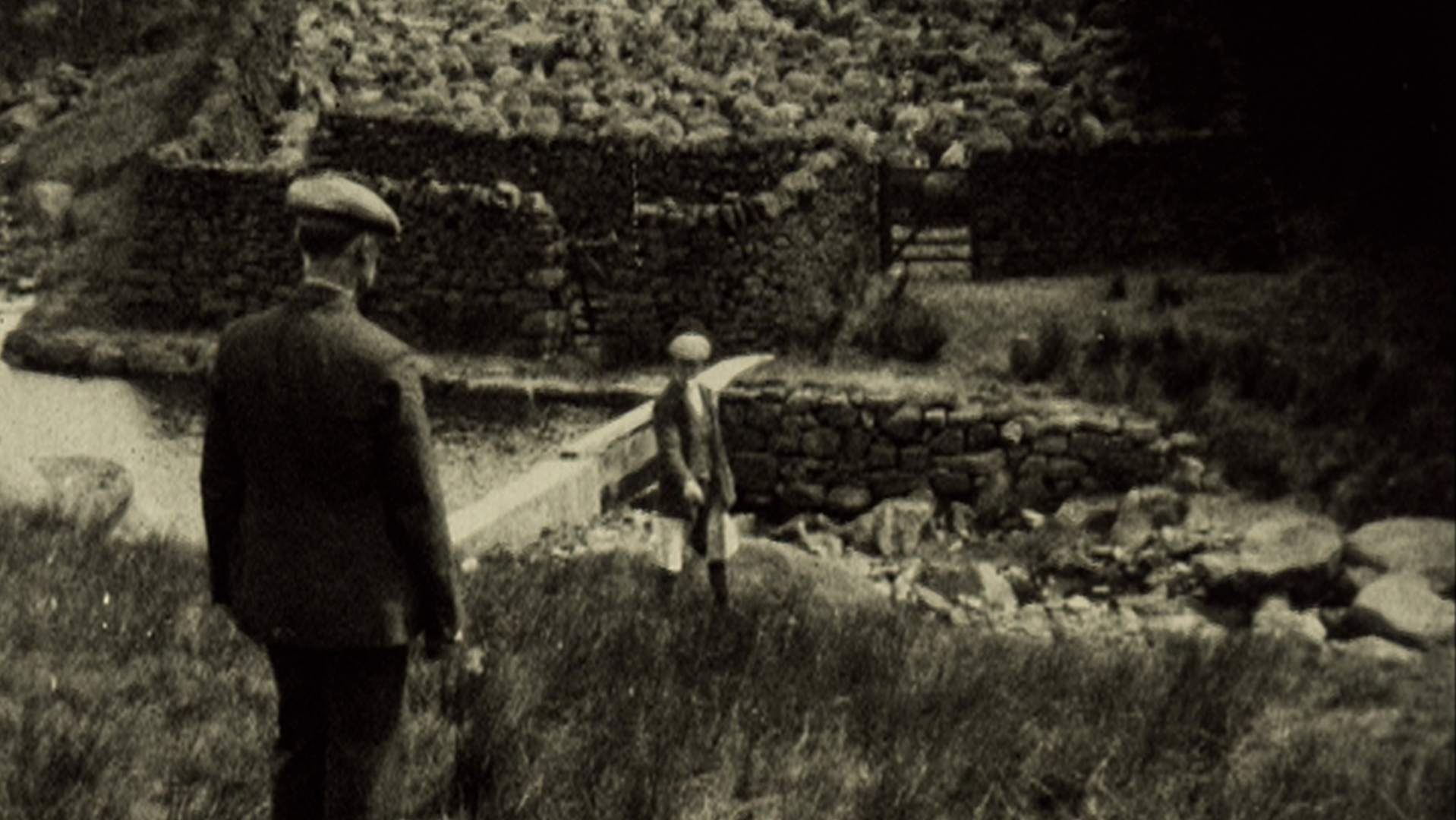
This is rare film of a traditional practice of sheep washing that goes back to at least the 8th century, and would have been on the way out by the time of this film was taken in the mid-1930s on Grassington Moor. Here the sheep get a good soak, helped with metal hooks, in a washfold that may be an abandoned mill pond. With the dirt, grit and grease removed, several farmers haul the sheep onto wooden benches and cut off their fleeces with shears, which are carried off by horse and cart.
It isn’t known who took this film, one of several made in Upper Wharfedale during the 1930s and collected by Revd. G. Curry. When the practice of washing sheep in washfolds was outlawed isn’t clear. It isn’t to be confused with dipping, which was introduced in the early 1900s to help eradicate sheep scab, which was achieved in the 1960s. However its re-appearance in 1973 led to dipping being re-introduced – ending in 1992 amid concerns of the side effects of organophosphate pesticides (for which compensation is still sought). Although Rough Fell sheep are a hardy breed, 75% reside within a radius of less than 20 kilometres, making them vulnerable to disease, and so listed as a category 2 endangered species.