Free 14-day trial, then just £6.99 per month.
Please enter a valid email address
By entering your email address you are indicating that you have read and agree to the terms of use and privacy policy.
Free 14-day trial, then just £6.99 per month.
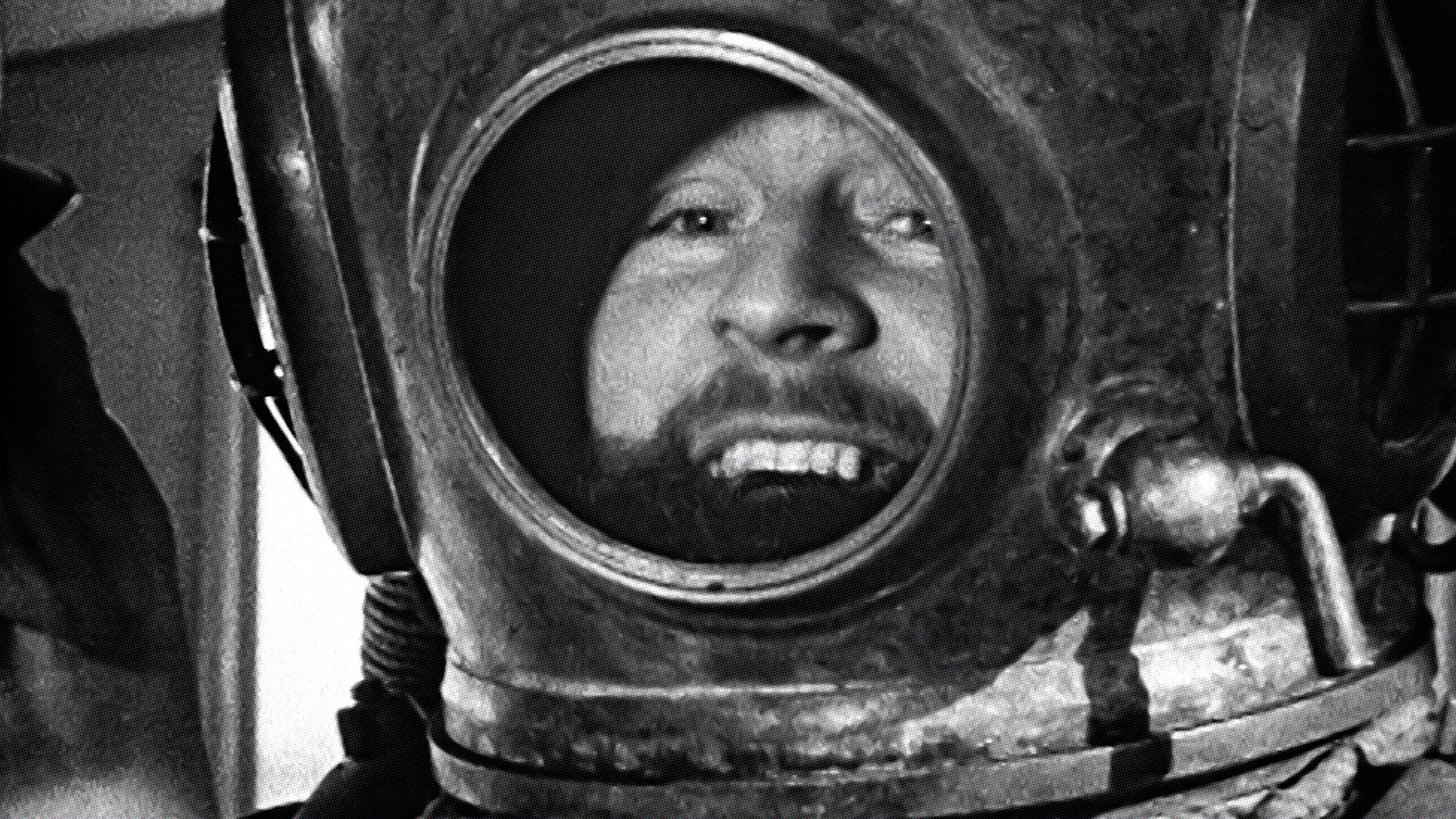
Clive Gunnell dons his own deep-sea diving suit for a spot of underwater welding.
TV reporter Clive Gunnell is at the Royal Navy's Dive School in Her Majesty's Naval Base Devonport in Plymouth. Known as clearance divers for work in clearing underwater mines and munitions, navy divers undergo rigorous training. They no longer use standard diving dress of a canvas diving suit, a copper or brass helmet and heavy shoes with a linesman above water who would be responsible for the lifeline or oxygen pipe. Rebreather systems made the apparatus self-contained.
Specialist navy divers were at first used to clear obstruction underwater by setting explosives during the Second World War. They developed to clear unexploded bombs from ports after booby traps had been laid to protect enemy interests during the war. An American animation series from 1960 named Diver Dan also lent its name to the standard dive suit. Modern frogmen came about after an Italian commando group used limpet mines against British ports in the Mediterranean. An Italian frogman acting as a human torpedo was captured at Gibraltar and a British unit was set up to copy the Pirelli-inspired frogsuit and the British adopted fins in 1942. Advanced navy diver training is still carried out in Plymouth.